
Last updated: June 2026
If you are looking for mental health support, it is easy to feel unsure about where to start. Should you see a psychologist, a psychiatrist, a psychotherapist or a counsellor?
This guide explains the psychologist vs psychiatrist question in plain English, including who can prescribe medication, who provides therapy, and how to choose the right support for you.
In this guide, we cover:
- The difference between a psychologist and psychiatrist
- When to see a psychiatrist
- When to see a psychologist
- Where psychotherapy and counselling fit in
- What to do if you are not sure who you need
- How BetterCare can help you find the right support
Psychologist vs Psychiatrist: Quick Comparison
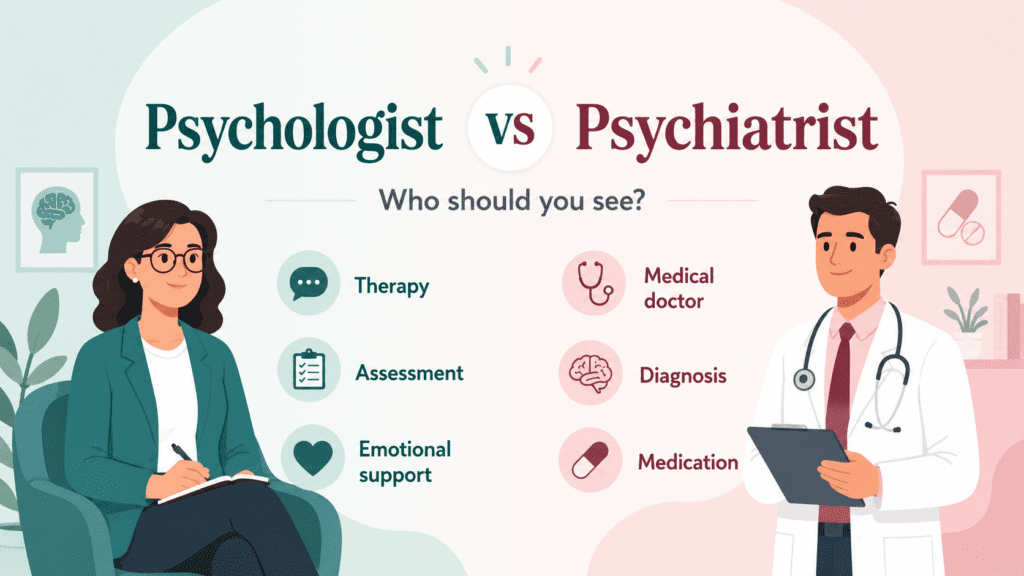
This psychologist vs psychiatrist comparison gives a short overview of the main differences.
| Question | Psychologist | Psychiatrist |
|---|---|---|
| Are they a medical doctor? | No | Yes |
| Can they prescribe medication? | No | Yes |
| Can they diagnose mental health conditions? | Yes, within their area of training and assessment | Yes |
| What do they usually help with? | Assessment, therapy, emotional and behavioural support | Diagnosis, medication, complex or severe mental health conditions |
| Do they offer talking therapy? | Often, yes | Sometimes, depending on the psychiatrist and treatment plan |
| When might you see them? | Anxiety, low mood, stress, trauma, coping difficulties, behavioural concerns or assessments | Severe depression, bipolar disorder, psychosis, complex symptoms, medication review or diagnostic clarity |
Both psychologists and psychiatrists can play an important role in mental health care. One is not “better” than the other. They simply have different training, different roles and different ways of supporting people.
Psychologist vs Psychiatrist: What Does a Psychiatrist Do?
A psychiatrist is a medical doctor who has specialised in mental health. Because psychiatrists are doctors, they can assess both the psychological and medical aspects of mental health difficulties.
A psychiatrist may help with:
- Diagnosing mental health conditions
- Assessing complex or severe symptoms
- Prescribing and reviewing medication
- Considering how physical health, medication, sleep, substances or other medical factors may affect mental health
- Supporting people with conditions such as severe depression, bipolar disorder, psychosis, ADHD, anxiety disorders, OCD, trauma-related conditions or other psychiatric concerns
- Creating a treatment plan, which may include medication, therapy, lifestyle recommendations or referral to another professional
A psychiatrist may be especially helpful if symptoms are severe, have been present for a long time, are affecting daily functioning, or if medication may be part of treatment.
If you are looking for medical assessment, diagnosis or medication support, BetterCare’s psychiatry service might be a good place to start.
Psychologist vs Psychiatrist: What Does a Psychologist Do?
A psychologist is trained in understanding how people think, feel, behave, learn and relate to others. Psychologists are not medical doctors and do not prescribe medication, but they can provide assessment, psychological formulation, therapy and evidence-based support.
A psychologist may help with:
- Anxiety, low mood, stress or emotional distress
- Behavioural or emotional difficulties
- Trauma and difficult life experiences
- Coping skills and emotional regulation
- Relationship or family difficulties
- Psychological assessment
- Neurodevelopmental or learning-related concerns, depending on the psychologist’s area of practice
- Understanding patterns in thoughts, feelings and behaviour
Psychologists often use structured, evidence-based approaches to help people understand what is happening and develop ways to manage difficulties.
BetterCare’s psychology service supports adults, children, young people and families with a range of emotional, behavioural and mental health needs.
What Is a Psychotherapist?
A psychotherapist provides talking therapy to help people explore emotional difficulties, patterns, relationships, trauma, life experiences and mental health concerns.
Psychotherapy may be helpful if you want to:
- Understand yourself better
- Work through anxiety, low mood, grief, trauma or stress
- Explore relationship patterns
- Process difficult experiences
- Build coping strategies
- Improve self-esteem or emotional wellbeing
- Make sense of long-term patterns in your life
Psychotherapy is often a good option when you are looking for regular talking therapy rather than medical assessment or medication.
If you are looking for ongoing talking therapy, BetterCare’s psychotherapy service may be more appropriate than psychiatry.
What Is a Counsellor?
A counsellor also provides talking therapy and emotional support. Counselling is often focused on helping people work through specific issues, life challenges or periods of emotional difficulty.
Counselling may help with:
- Stress
- Bereavement
- Relationship difficulties
- Life changes
- Mild to moderate anxiety or low mood
- Work-related pressure
- Confidence and self-esteem
- Coping with difficult situations
Some people use the words counselling and psychotherapy interchangeably, and there can be overlap between the two. The right fit often depends on the person’s needs, the therapist’s training and the type of support being offered.
For adults looking for more affordable therapy, BetterCare also offers low-cost counselling.
When Should You See a Psychiatrist?
A psychiatrist may be the right professional to see if you need medical assessment, diagnostic clarity or medication support.
You may consider seeing a psychiatrist if:
- Your symptoms are severe or worsening
- You are struggling to function at work, school, college or home
- You may need medication
- You are already taking psychiatric medication and need a review
- You have complex or long-standing mental health symptoms
- There are concerns about bipolar disorder, psychosis, severe depression, ADHD, OCD or other psychiatric conditions
- You have tried therapy but still feel you need further assessment
- You are unsure whether your symptoms are linked to mental health, physical health, medication or another factor
A psychiatrist can help assess what may be happening, whether a diagnosis is appropriate, and what treatment options may help.
If you are unsure what type of support you need, a psychiatric mental health assessment can help clarify diagnosis, medication needs and next steps.
When Should You See a Psychologist?
A psychologist may be the right professional to see if you want psychological assessment, emotional support or help understanding patterns in thoughts, feelings and behaviour.
You may consider seeing a psychologist if:
- You are struggling with anxiety, low mood, stress or emotional regulation
- You want to understand your thoughts, behaviours or coping patterns
- You need support with trauma, adjustment, relationships or self-esteem
- A child or young person is experiencing emotional or behavioural difficulties
- You are looking for psychological strategies rather than medication
- You need an assessment, formulation or recommendations for support
- You want evidence-based therapy or psychological intervention
A psychologist can help you understand what may be contributing to the difficulty and work with you on practical ways to manage it.
When Is Psychotherapy or Counselling the Right Choice?
Psychotherapy or counselling may be a good place to start if you are looking for regular talking therapy and do not currently need medical assessment or medication.
This may suit you if:
- You want to talk through what you are experiencing
- You are dealing with stress, grief, relationship difficulties or life changes
- You are feeling anxious, low or overwhelmed
- You want to build coping skills
- You want to understand long-term patterns or past experiences
- You would prefer emotional support before considering medication
- You are not in immediate crisis but know you need help
Many people benefit from therapy even if they do not have a formal mental health diagnosis. You do not need to wait until things feel unmanageable before seeking support.
What If You Need More Than One Professional?
Sometimes the best support involves more than one professional.
For example:
- A psychiatrist may assess and prescribe medication, while a psychotherapist provides regular therapy.
- A psychologist may complete an assessment and recommend therapy, school support or further psychiatric review.
- A counsellor may support someone with stress or adjustment, while a GP or psychiatrist helps with medication if symptoms become more severe.
- A child or young person may need input from psychology, psychiatry, occupational therapy or speech and language therapy depending on their needs.
This does not mean your situation is more serious. It simply means different professionals can support different parts of your mental health and wellbeing.
At BetterCare, our team can help guide you towards the right service, whether that is psychiatry, psychology, psychotherapy, counselling or another type of support.
Psychologist or Psychiatrist for Anxiety?
For mild to moderate anxiety, a psychologist, psychotherapist or counsellor may be a good place to start. Therapy can help you understand anxiety, identify triggers, build coping strategies and change patterns that may be keeping anxiety going.
A psychiatrist may be more appropriate if anxiety is severe, persistent, linked with panic attacks, OCD, trauma, depression or another mental health condition, or if medication may be needed.
If you are not sure, it can help to speak with a service that offers several types of mental health support so you can be guided towards the most suitable option.
Psychologist or Psychiatrist for Depression?
For mild to moderate depression, talking therapy with a psychologist, psychotherapist or counsellor may be helpful.
A psychiatrist may be more suitable if depression is severe, long-lasting, recurrent, linked with suicidal thoughts, affecting daily functioning, or if medication needs to be considered or reviewed.
If you are worried about your safety or someone else’s safety, seek urgent help immediately through emergency services, your GP out-of-hours service, or your nearest emergency department.
Psychologist or Psychiatrist for ADHD?
ADHD assessment and treatment may involve different professionals depending on age, symptoms and the type of support needed.
A psychologist may be involved in assessment, behavioural support, emotional support or strategies for managing attention, organisation and daily functioning.
A psychiatrist may be involved where medical diagnosis, medication or review of co-occurring mental health conditions is needed.
BetterCare offers ADHD assessments and related mental health support for adults, children and young people.
What If I Am Not Sure Who I Need?
It is very common not to know where to start. You may know that you need help, but not know whether that means psychiatry, psychology, psychotherapy, counselling or another type of assessment.
If the psychologist vs psychiatrist decision still feels unclear, it can help to speak with a team that offers several types of mental health support.
You might benefit from:
- Psychiatry if medication, diagnosis or complex symptoms are part of the picture
- Psychology if you need psychological assessment, formulation or evidence-based support
- Psychotherapy if you want regular talking therapy
- Counselling if you need emotional support with a specific issue or life challenge
- A free consultation if you are unsure which service is most appropriate
How BetterCare Can Help
BetterCare offers a range of private mental health services for adults, children, young people and families in Ireland.
Our services include psychiatry, psychology, psychotherapy, low-cost counselling, psychiatric mental health assessment, child and adolescent psychiatry, ADHD assessments, autism assessments, occupational therapy and speech and language therapy.
If you are not sure which service is right for you, you can book a free consultation with BetterCare. Our team will listen to what you are looking for and help guide you towards the most suitable next step.
Psychologist vs Psychiatrist FAQs
What is the main difference between a psychologist and psychiatrist?
The psychologist vs psychiatrist question usually comes down to whether you need medical assessment and medication, psychological support, or both.
The main difference is that a psychiatrist is a medical doctor who can prescribe medication. A psychologist is not a medical doctor, but is trained in assessment, therapy and psychological support.
Can a psychologist prescribe medication in Ireland?
No. Psychologists do not prescribe medication. If medication is needed, this is usually discussed with a GP or psychiatrist.
Can a psychiatrist provide therapy?
Some psychiatrists may provide therapy, but many focus mainly on diagnosis, medication and treatment planning. They may also recommend psychotherapy, psychology or counselling as part of a wider treatment plan.
Is a psychiatrist better than a psychologist?
No. They have different roles. A psychiatrist may be more appropriate when medical assessment, diagnosis or medication is needed. A psychologist may be more appropriate for psychological assessment, therapy and support with thoughts, emotions and behaviour.
Should I see a psychologist or psychiatrist for anxiety?
It depends on the severity and nature of the anxiety. A psychologist, psychotherapist or counsellor may help with mild to moderate anxiety. A psychiatrist may be more appropriate if anxiety is severe, complex, long-standing or if medication may be needed.
Should I see a psychologist or psychiatrist for depression?
For mild to moderate depression, therapy may be a good place to start. A psychiatrist may be more appropriate if depression is severe, recurrent, affecting daily functioning or if medication needs to be considered.
Do I need a referral to see a psychiatrist privately?
Referral requirements can vary. Some private services accept self-referrals, while others may ask for information from your GP or another healthcare professional. If you are unsure, contact the service directly and ask what is required.
What is the difference between a psychotherapist and a counsellor?
Both provide talking therapy and emotional support. Counselling is often focused on specific issues or life challenges, while psychotherapy may involve deeper or longer-term work on emotional patterns, relationships, trauma or past experiences. There can be overlap between the two.
What if I choose the wrong professional?
You are not expected to know everything before asking for help. If you start with one professional and they feel another type of support would be more suitable, they can usually guide you towards the right next step.
How do I know which BetterCare service to book?
If you are unsure, book a free consultation with BetterCare. The team can help you decide whether psychiatry, psychology, psychotherapy, counselling or another service is the best starting point.
