
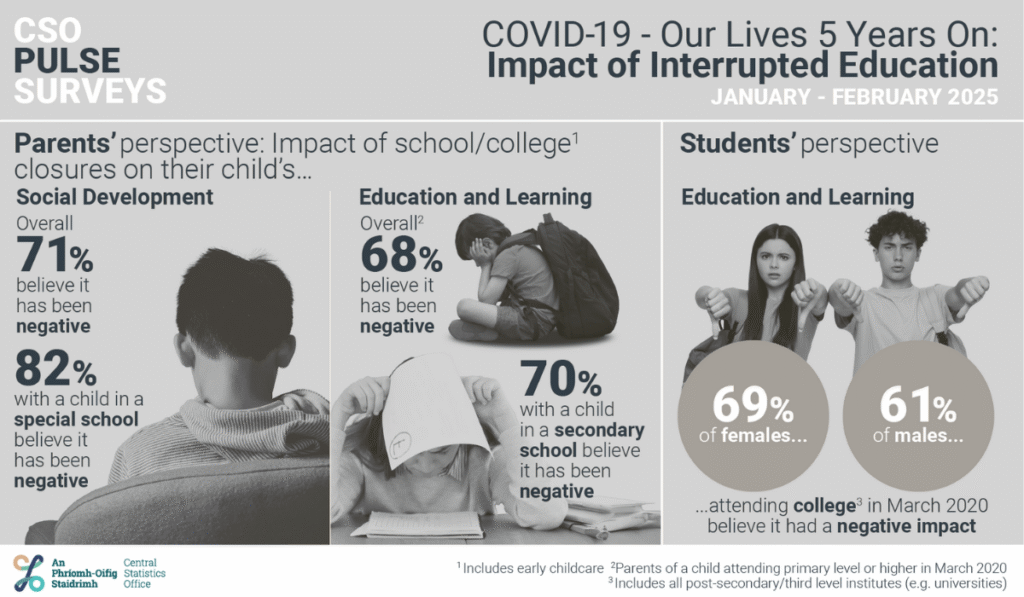
The COVID lockdowns may feel like the past, but many families are still seeing the effects on teenagers’ mental health, confidence, learning, sleep, relationships and social development.
For some young people, the disruption of school closures, reduced social contact and sudden changes in routine may have intensified difficulties that were already there. For others, anxiety, low mood, concentration difficulties or emotional overwhelm became more noticeable when normal school and social life returned.
If your teenager is still struggling after the pandemic years, they are not alone. Support is available, and early help can make a real difference.
How COVID and Lockdown Affected Teen Mental Health
Teenagers in Ireland experienced two extended periods of school closure during the pandemic, along with restrictions on sport, friendships, family contact, hobbies and normal routines.
For young people, school is not just about education. It is also where they build friendships, develop independence, practise social skills, access support and create structure in their week.
When this was suddenly interrupted, many teenagers experienced:
- increased anxiety
- low mood or depression
- loneliness and isolation
- reduced motivation
- difficulty concentrating
- disrupted sleep
- increased screen time
- reduced physical activity
- emotional outbursts or irritability
- loss of confidence in social situations
For some teenagers, these difficulties improved as life returned to normal. For others, the effects have lasted longer.
Why Some Teenagers Are Still Struggling
Teenagers went through the pandemic at an important stage of emotional, social and educational development. Missing out on ordinary routines, friendships, classroom learning, sport, exams, milestones and independence may have had a bigger impact than many adults realised at the time.
Some young people found it difficult to return to school or social life. Others became more withdrawn, anxious or reliant on screens. Some struggled with the pressure to “catch up” academically or socially.
Teenagers who were already experiencing mental health difficulties, neurodevelopmental differences, learning challenges, family stress or social anxiety may have found the transition especially hard.
If your teenager is still affected by anxiety, low mood, emotional regulation or confidence, child and adolescent psychotherapy can offer a supportive space to understand what is going on and develop healthier coping strategies.
Signs Your Teenager May Need Extra Support
It can be hard to know what is typical teenage behaviour and what may be a sign that your child needs more support. Occasional moodiness, tiredness or wanting privacy can be normal. But ongoing changes that affect daily life are worth paying attention to.
Signs to look out for include:
- ongoing anxiety, panic or avoidance
- low mood, tearfulness or hopelessness
- withdrawing from friends or family
- loss of interest in activities they used to enjoy
- school refusal or frequent absences
- difficulty sleeping or sleeping much more than usual
- major changes in appetite or eating patterns
- increased irritability, anger or emotional outbursts
- difficulty concentrating or completing schoolwork
- increased reliance on screens or gaming
- substance use or risk-taking behaviour
- self-harm or talk of not wanting to be here
If your young person is at immediate risk, call 999 or 112 or go to your nearest Emergency Department. You can also contact Samaritans on 116 123 or Pieta on 1800 247 247.
Anxiety, Low Mood and Emotional Regulation
Many teenagers experienced increased anxiety during and after lockdown. For some, this showed up as worry about school, health, friendships, exams or leaving the house. For others, it appeared as irritability, anger, panic, avoidance or physical symptoms such as headaches, stomach aches or tiredness.
Low mood may look different in teenagers than it does in adults. A teenager may seem withdrawn, unmotivated, angry, numb or unusually tired rather than openly sad.
Emotional regulation can also become harder when young people are overwhelmed. This may lead to arguments, shutdowns, outbursts or difficulty coping with everyday stress.
Where anxiety, low mood or emotional overwhelm are affecting day-to-day life, psychology support for children and teenagers or psychotherapy may help your teenager understand their emotions and build practical coping strategies.
Concentration, Learning and School Difficulties
Some teenagers found it difficult to concentrate during online learning. Others struggled when they returned to the classroom after long periods away from normal school routines.
If your teenager is finding schoolwork harder, falling behind, avoiding homework, struggling with organisation or losing confidence, it may be helpful to look at what is underneath the difficulty.
Sometimes concentration problems are linked to stress, anxiety, poor sleep or low mood. In other cases, they may overlap with ADHD, autism, dyslexia, processing speed difficulties or other learning needs.
If attention, organisation or impulsivity are affecting school or home life, a child and adolescent ADHD assessment may help clarify what support is needed.
If your child is struggling with reading, writing, maths, memory, processing speed or learning confidence, a psycho-educational assessment can help identify strengths, challenges and practical recommendations for school.
Social Confidence and Development
Lockdown reduced many teenagers’ opportunities to practise everyday social skills. For some, returning to groups, classrooms, sport, friendships and busy social environments felt overwhelming.
You may notice that your teenager:
- avoids social situations
- feels anxious before school or activities
- has lost confidence with friends
- spends more time alone
- struggles with group settings
- finds change or busy environments difficult
- seems more sensitive to noise, crowds or routines
For some young people, social communication or sensory differences became more noticeable during or after the return to school. Where parents have ongoing concerns about social interaction, sensory needs or developmental differences, a child and adolescent autism assessment may help identify the right supports.
Screen Time, Sleep and Routine
During lockdown, many young people relied heavily on screens for school, friendships, entertainment and distraction. For some teenagers, screen habits became difficult to rebalance afterwards.
High levels of screen time can affect sleep, mood, concentration and family relationships, especially when phones, gaming or social media are used late at night.
Rather than focusing only on rules, it can help to look at what the screen use is doing for your teenager. Are they avoiding anxiety? Looking for connection? Escaping boredom? Managing loneliness? Feeling safer online than in person?
Small changes to routine can help, such as:
- keeping phones out of bedrooms overnight
- creating a calmer bedtime routine
- agreeing screen-free times rather than sudden bans
- encouraging outdoor time or movement
- rebuilding hobbies and social activities gradually
- modelling healthy screen habits as adults
If screen use is linked with anxiety, low mood, conflict or withdrawal, professional support may help your teenager and family understand the pattern and find a more balanced approach.
Family Relationships and Communication
The pandemic placed huge pressure on families. Many parents were trying to work, care, teach, manage uncertainty and support children’s mental health all at once.
For teenagers, being at home for long periods may have intensified family conflict, reduced privacy and made normal independence more difficult. Even now, some families are still dealing with tension, communication difficulties or changes in behaviour that began during that period.
If tension, conflict or communication difficulties have built up at home, family therapy or parental guidance can support families to understand each other better and find more helpful ways forward.
How Parents Can Support a Teenager’s Mental Health
You do not need to have all the answers. Often, the most helpful thing you can do is create small, regular opportunities for your teenager to talk without feeling judged, rushed or interrogated.
Try to:
- choose calm moments rather than starting difficult conversations during arguments
- listen before offering advice
- validate how they feel, even if you do not fully understand it
- avoid dismissing worries as “just teenage drama”
- notice changes in sleep, eating, mood, friendships and school attendance
- keep routines predictable where possible
- encourage movement, fresh air and offline connection
- ask directly about self-harm or suicidal thoughts if you are worried
- seek professional advice if difficulties are ongoing
A simple opening can be enough:
“I’ve noticed you haven’t seemed yourself lately. I’m not angry, and you’re not in trouble. I just want to understand what’s going on.”
When to Consider Therapy or Assessment
It may be time to seek support if your teenager’s difficulties are lasting more than a few weeks, affecting school or relationships, causing distress, or making everyday life harder.
Support may be helpful if your teenager is experiencing:
- anxiety or panic
- low mood or depression
- emotional outbursts
- social withdrawal
- school refusal
- sleep difficulties
- family conflict
- grief, trauma or major life changes
- concentration or learning difficulties
- suspected ADHD, autism or other developmental differences
- self-harm or suicidal thoughts
Therapy gives young people a safe space to explore what they are feeling and develop coping strategies. For younger children or teenagers who find it hard to express themselves through words alone, art and play therapy can offer another way to explore feelings, build trust and process difficult experiences.
In some cases, an assessment may also help clarify what is contributing to the difficulty and what supports are most appropriate.
Teen Mental Health Support at BetterCare
If you are concerned about your child or teenager’s mental health, BetterCare offers a range of supports for children, adolescents and families.
These include child and adolescent psychotherapy, child and adolescent psychiatry, psychology, art and play therapy, ADHD assessments, autism assessments, psycho-educational assessments, family therapy and parental guidance.
If you are unsure where to start, you can book a free 15-minute consultation, and a member of our team can help you understand the most appropriate next step.
To learn more or book an appointment, call 01-5563335, WhatsApp 089-2300366, or book through the link below.
