
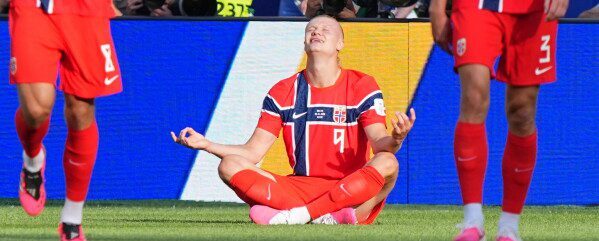
The World Cup is a lesson in the psychology of pressure, where players must manage expectation, scrutiny and high-stakes moments in front of millions.
From the mental “Flow State” mastery of Lionel Messi and Cristiano Ronaldo to the exceptional emotional regulation of Kylian Mbappé and Lamine Yamal, mental fitness is the key to overcoming intense pressure.
Even those at the very top of their soccer game need effective coping strategies. Sarah Carvell, Senior Lecturer in Sports Psychology at the University of Gloucestershire, has argued that footballers competing at the World Cup should be understood not only as athletes, but as public figures navigating complex psychosocial demands.
They are carrying the expectations of supporters, coaches, sponsors, teammates, families and entire nations. In that environment, talent alone is not enough. Players also need the psychological skills to manage pressure, recover from setbacks and stay focused when the stakes are at their highest.
Many teams have begun to promote healthy coping strategies aimed at supporting players. Psychological skills training (PST), for example, goal setting, visualisation, and cognitive reframing can help athletes manage pressure more effectively.
Most of us will never take a penalty in front of millions of people, but many of us know what it feels like to be under pressure. Whether in sport, business, or leadership, the highest performers are not necessarily those with the greatest talent. Often, they are the ones best equipped psychologically to carry the weight that comes with expectation.
What is the psychology of pressure?
Controlled mind-wandering: why Messi looks away from the ball
One of the most interesting ideas in football psychology is controlled mind-wandering. Mind-wandering is often described negatively, as if it means zoning out or losing concentration. In sport, that sounds risky because a lapse in attention can lead to a mistake. But newer thinking suggests that the brain is not necessarily resting when attention appears to drift. It may simply be processing information differently.
Dr Eric Zillmer has discussed this in relation to Lionel Messi. Researchers examining Messi’s gaze found that his eyes are often off the ball. On the surface, that may look like inattention. In reality, it appears to be a form of scanning. Messi is taking in the wider picture: where teammates are moving, where defenders are positioned, where space may open up and what might happen next.
This is not the same as switching off. It is a shift from narrow attention to broad awareness. The remarkable skill is being able to move between the two. A player like Messi can scan the wider game, absorb information, and then snap back into intense focus when the decisive moment appears.
This idea has value beyond football. When people are anxious or stressed, attention often narrows. The mind fixates on one worry, one mistake, one email, one comment or one possible outcome. Sometimes what helps is not more intense focus, but a broader view. What else is happening here? What am I missing? What is within my control? What matters most in this moment?
Attentional fitness: staying focused when it matters
One of the first skills to break down under pressure is the ability to focus. This is why the best finishers are not simply technically gifted. They are also able to manage attention efficiently when the stakes are high.
When people describe players such as Harry Kane, Kylian Mbappé or Erling Haaland as having “ice-cold composure” or “nerves of steel”, they are often describing attentional control. These players are not free from pressure. Rather, they are able to manage several streams of information at once and still lock into the task when the moment demands it.
That is an important point because composure is often treated as a personality trait. We talk as if some people are simply born calm and others are not. But attentional control can be trained. Athletes work on it through routines, rehearsal, breathing, visualisation and psychological skills training.
Paddy Upton, who has worked across elite sport and leadership, argues that the real differentiator is often distraction management rather than a vague idea of mental toughness. Elite performers still get distracted. The difference is that they notice it quickly and return to the task faster. That is a more human and useful way to understand focus. Distraction is not failure. Staying there is.
In everyday life, attentional fitness might mean staying present during a difficult meeting, focusing during an exam, returning to work after a setback or listening properly during conflict instead of becoming consumed by your own internal commentary. It does not mean never being distracted. It means noticing when attention has been pulled away and learning how to come back.
Disruption: why talent is not always enough
At the World Cup, the most talented team does not always win. One reason is disruption. A less technically gifted team can reduce the gap by making the other team uncomfortable, breaking their rhythm and forcing them into unfamiliar situations.
Disruption can happen through aggressive pressing, tactical fouls, set pieces, counterattacks, physical intensity or psychological irritation. It is not only a tactical plan. It is also a mindset. A team does not need to be more talented than its opponent if it can make that opponent rushed, frustrated or uncertain.
There is a wider life lesson here too. Most people can cope better when conditions are calm, predictable and supportive. The real test often comes when something disrupts us. A difficult email arrives before an important meeting. A conversation does not go as expected. A criticism lands at the wrong time. A plan changes suddenly. Someone else’s behaviour throws us off balance.
Psychological resilience is not about creating perfect conditions. It is about learning how to respond when conditions are imperfect.
Tactical creativity: finding more than one way through
Modern football also depends on tactical creativity. Players need to solve complex problems quickly, often while under pressure and with very little time to think. Psychologists often link this with divergent thinking, which means being able to generate several possible solutions rather than defaulting to the most obvious one.
A tactically creative player sees options others miss. They notice space, anticipate movement and make decisions that surprise the opposition. This kind of creativity requires both discipline and freedom. A player needs structure, but they also need enough confidence to experiment.
This is why Mauricio Pochettino’s reported advice to “play like children” is so interesting. Children experiment. They try things. They are not as afraid of making mistakes. In sport, that freedom can allow creativity to emerge, especially in moments when a predictable choice will not be enough.
Stress can have the opposite effect. When people feel anxious or overwhelmed, their thinking often becomes rigid. They may keep returning to the same fear or the same solution, even when it is not helping. They may become convinced there is only one possible outcome or one acceptable way to respond.
Choking under pressure: when overthinking gets in the way
Choking under pressure is one of the clearest examples of the relationship between anxiety and performance. It happens when a person who has the skill to perform becomes overwhelmed by the pressure of the moment. The mind starts monitoring the performance too closely, and that interferes with automatic execution.
This can happen in football during a penalty, but it can also happen in public speaking, interviews, exams, music performances, or difficult conversations. A person becomes so aware of themselves performing that the performance itself becomes harder.
One of the reasons this happens is that worry takes up mental space. Instead of focusing on the task, the person is also thinking about the consequences of failure, how others are judging them, what might happen next or what the mistake would mean about them. That extra load can make it harder to think clearly and act naturally.
How to combat the choke
There are several evidence-informed ways to reduce the risk of choking. Breathing exercises can help calm the nervous system. Visualisation can allow the brain to rehearse high-pressure moments in advance. Mindfulness can help people notice anxious thoughts without becoming completely absorbed by them. Cognitive reframing can change how we interpret the physical signs of pressure.
For example, a pounding heart and sweaty palms do not always have to mean “I am going to fail”. They can also mean “my body is preparing me for something important”. That shift may sound small, but it can change how a person relates to pressure.
What the World Cup can teach us about mental health
The World Cup is a reminder that mental health is not only relevant when someone is in crisis. It is also about how people manage pressure, recover from setbacks, regulate emotions, maintain focus, think flexibly and separate performance from identity.
A missed penalty is not a whole person. A poor meeting is not a whole career. A bad exam is not the whole future. A mistake is not an identity.
This distinction matters because pressure often becomes more damaging when it attaches itself to self-worth. If every outcome becomes proof of who we are, then every setback feels threatening. Therapy can help people separate what happened from what it means about them. It can also help people develop healthier ways to respond to stress, criticism, uncertainty and disappointment.
Elite players use psychological preparation because the mental side of performance matters. They use goal-setting, visualisation, routines, reframing, breathing techniques, recovery strategies and support systems. These tools are not only for athletes. They are relevant to anyone trying to cope with pressure in daily life.
You do not need to be an elite athlete to train your mind
Most of us will never experience the pressure of a World Cup knockout match, but we all face moments that test our focus, confidence and emotional regulation. We may experience pressure at work, in study, in relationships, in parenting, in leadership or during major life changes.
The lesson from World Cup player psychology is not that we should all become tougher or push ourselves harder. It is that pressure is human, and even the most talented people in the world need strategies to manage it.
At BetterCare, our therapists support people with anxiety, stress, overthinking, emotional regulation, self-confidence, burnout, life challenges and pressure in everyday life. Therapy can help you better understand your responses, develop coping strategies and build the mental skills needed to navigate difficult moments more effectively.
You do not have to wait until you are in crisis to seek support. Mental fitness can be supported, practised and strengthened over time.
Sometimes the most important performance skill is not pushing harder. It is learning how to pause, reset and return to what matters.
Sources
University of Gloucestershire. Pressure: The psychological burden of elite footballers at 2026 World Cup.
The Conversation. How Messi, Mbappé and Haaland use their brains, as well as feet, to gain a psychological edge at the World Cup.
The HR Director. The World Cup: what real mental toughness looks like.
Paddy Upton. Why mental toughness is overrated — and what to train instead.

One Response