
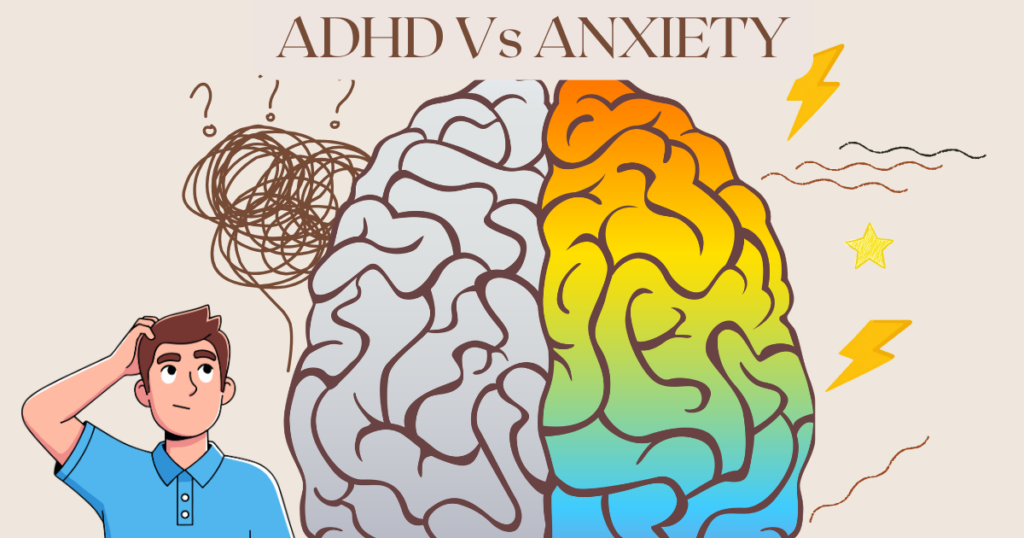
ADHD and anxiety are two common mental health conditions that can sometimes appear similar. Both may affect concentration, focus and everyday functioning, which can make it difficult to tell them apart.
Because of these overlaps, anxiety may sometimes be mistaken for ADHD, or ADHD symptoms may be attributed to anxiety. In some cases, individuals may experience both ADHD and an anxiety disorder at the same time.
Clinical research and treatment guidelines note that anxiety disorders are among the most common conditions that occur alongside ADHD, meaning many people may experience symptoms of both conditions at the same time.
What Is ADHD?
Attention-Deficit Hyperactivity Disorder (ADHD) is a neurodevelopmental condition that affects attention, impulse control and activity levels. Although ADHD is often diagnosed in childhood, many people continue to experience symptoms into adulthood.
Symptoms can vary from person to person, but they generally fall into three main categories.
Inattention
People with ADHD may experience difficulties with attention and organisation. This can include:
- Difficulty maintaining focus
- Becoming easily distracted
- Forgetting everyday tasks or appointments
- Losing items or overlooking details
Hyperactivity
Hyperactivity may involve physical restlessness or difficulty remaining still.
Examples may include:
- Fidgeting or restlessness
- Feeling unable to sit still
- Talking frequently or excessively
- Feeling constantly “on the go”
Impulsivity
Impulsivity involves acting quickly without fully considering consequences.
Common examples include:
- Interrupting conversations
- Difficulty waiting for your turn
- Making decisions quickly without thinking them through
ADHD can present in different ways. Some individuals experience mainly inattentive symptoms, others experience hyperactive-impulsive symptoms, and some experience a combined presentation.
What Is Generalised Anxiety Disorder?
Generalised Anxiety Disorder (GAD) is a mental health condition characterised by persistent and excessive worry.
People experiencing anxiety may feel tense, worried or overwhelmed, even in situations where there is no immediate threat.
Common anxiety symptoms may include:
- Ongoing worry or dread
- Feeling restless or tense
- Difficulty sleeping
- Trouble concentrating
- Physical symptoms such as stomach discomfort or shortness of breath
Like ADHD, anxiety disorders do not have a single known cause. Genetics, stressful life events and psychological factors may all contribute to their development.
ADHD vs Anxiety: Key Differences
Although ADHD and anxiety share certain similarities, they differ in several important ways.
| Feature | ADHD | Anxiety |
|---|---|---|
| Typical age of onset | Symptoms usually begin in childhood, often before age 12. | Can develop at any stage of life, often in early adulthood. |
| Core difficulties | Attention regulation, impulsivity and hyperactivity. | Persistent worry, fear or dread. |
| Common symptoms | Distractibility, forgetfulness, impulsive behaviour and restlessness. | Excessive worry, tension, sleep problems and physical symptoms. |
| Causes | Exact cause unknown; genetics and brain development play a role. | Exact cause unknown; genetics, stress and life experiences may contribute. |
| Treatment approaches | Medication, behavioural therapy and skills training. | Psychotherapy, medication and coping strategies. |
ADHD Symptoms in Adults
Although ADHD is often identified during childhood, many people only recognise the symptoms later in adulthood. Adult ADHD can affect work performance, relationships and daily responsibilities.
Common ADHD symptoms in adults include:
Difficulty concentrating
Adults with ADHD may struggle to maintain attention during tasks such as meetings, reading or detailed work.
Disorganisation
Managing schedules, deadlines and responsibilities can feel overwhelming. Tasks may be started but not finished.
Forgetfulness
Adults with ADHD may frequently misplace items, forget commitments or overlook important details.
Restlessness
Hyperactivity in adults may appear as internal restlessness or difficulty relaxing rather than physical movement.
Impulsivity
Impulsive behaviour may include interrupting conversations, making quick decisions or speaking without thinking.
If these challenges are ongoing and affect daily life, a professional ADHD assessment in Ireland may help determine whether ADHD or another condition is contributing.
Can ADHD and Anxiety Occur Together?
Yes. ADHD and anxiety frequently occur together.
Research suggests that many individuals with ADHD also experience an anxiety disorder.
These conditions can influence each other. For example:
- Untreated ADHD may increase stress and overwhelm, which can contribute to anxiety.
- Anxiety can worsen concentration difficulties, making ADHD symptoms more noticeable.
Because symptoms overlap, a comprehensive assessment by a mental health professional is important to ensure an accurate diagnosis.
ADHD Assessment in Ireland
If you believe you may be experiencing ADHD symptoms, a professional ADHD assessment in Ireland can help clarify your diagnosis and guide treatment options.
A comprehensive ADHD assessment typically includes:
- A detailed clinical interview
- Review of symptoms and personal history
- Standardised questionnaires or screening tools
- Discussion of possible treatment approaches
An accurate diagnosis can help individuals better understand their experiences and access appropriate support.
Frequently Asked Questions
Can ADHD be mistaken for anxiety?
Yes. ADHD and anxiety share symptoms such as difficulty concentrating and restlessness. Because of this overlap, one condition may sometimes be mistaken for the other without a comprehensive assessment.
How can you tell the difference between ADHD and anxiety?
ADHD mainly affects attention, impulse control and activity levels, while anxiety involves persistent worry or fear. A clinician will evaluate symptoms, history and daily functioning to determine the correct diagnosis.
Can someone have ADHD and anxiety at the same time?
Yes. ADHD and anxiety often occur together. When both conditions are present, treatment may involve therapy, coping strategies and sometimes medication.
Can adults develop ADHD later in life?
ADHD symptoms typically begin in childhood, but some individuals may not recognise or receive a diagnosis until adulthood.
ADHD and Anxiety Support in Ireland
If you are experiencing ongoing difficulties with concentration, restlessness or persistent worry, professional support can help.
At BetterCare, we support individuals across Ireland with mental health assessments and therapy services designed to help people understand their symptoms and access appropriate treatment.
Seeking an ADHD Assessment or Anxiety/OCD Test can be an important step toward understanding your mental health and improving your wellbeing.
Sources
National Institute for Health and Care Excellence (NICE).
Attention deficit hyperactivity disorder: diagnosis and management (NG87).
https://www.nice.org.uk/guidance/ng87
Anxiety & Depression Association of America
https://adaa.org/understanding-anxiety/related-illnesses/other-related-conditions/adult-adhd
National Health Service – Attention Deficit Hyperactivity Disorder
https://www.nhs.uk/conditions/attention-deficit-hyperactivity-disorder-adhd/
National Health Service – Generalised Anxiety Disorder
https://www.nhs.uk/conditions/generalised-anxiety-disorder/

One Response